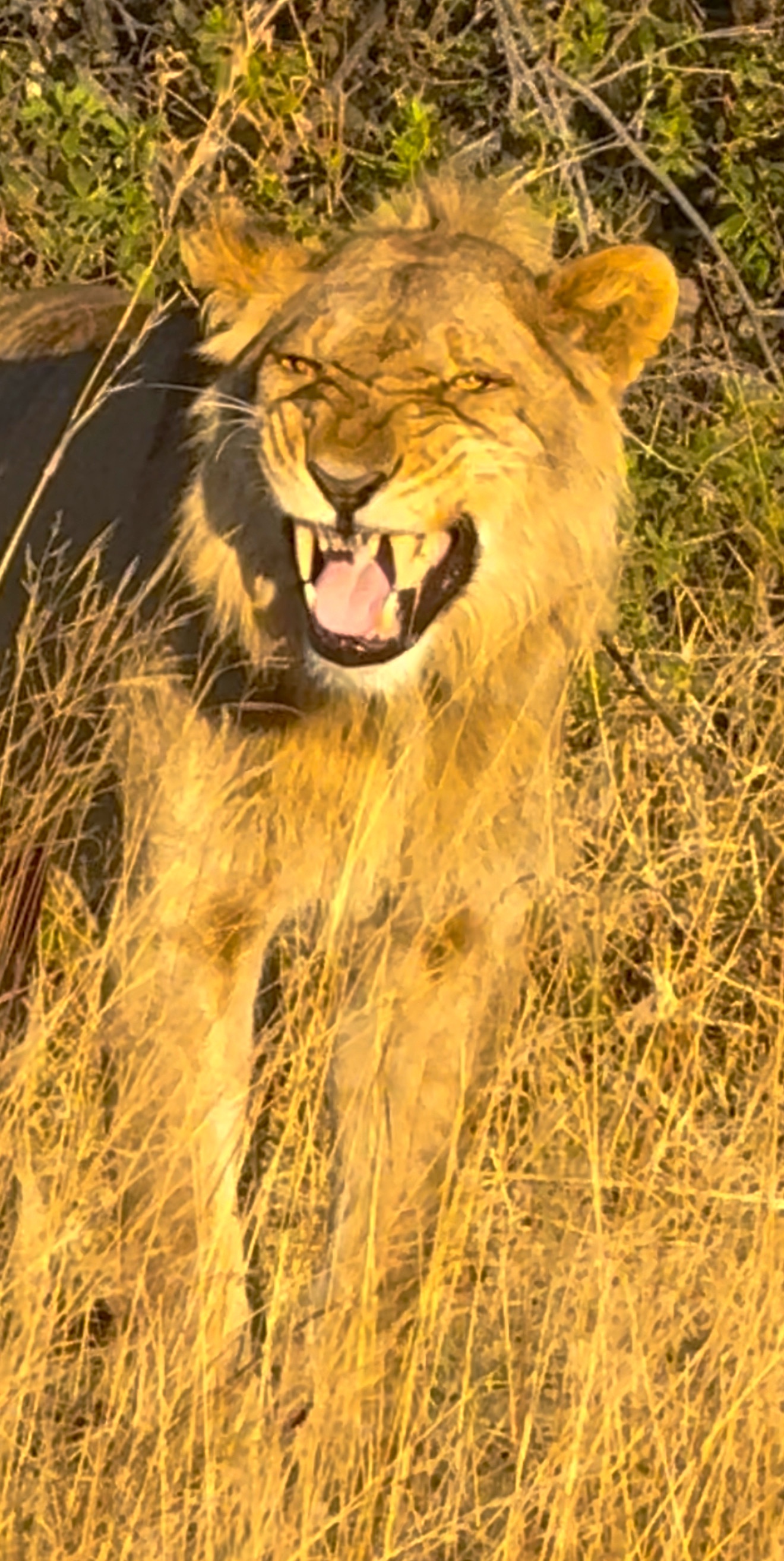
Here’s A Happy Lion!
Don’t worry, I didn’t make him angry: this Lion was squinting a bit into the afternoon sun….free to roam the Botswana countryside anyway he wanted to!
What we learned on our Safari adventure is that there are virtually NO restrictions on the movement of animals in South Africa, Botswana or Zimbabwe, the three countries we visited! Need proof? Check this out!
You see, when Lions want to lounge in the road, we wait until they are done! It’s one of the things we loved most about our trip – the land is for the animals to wander freely, with no restrictions!
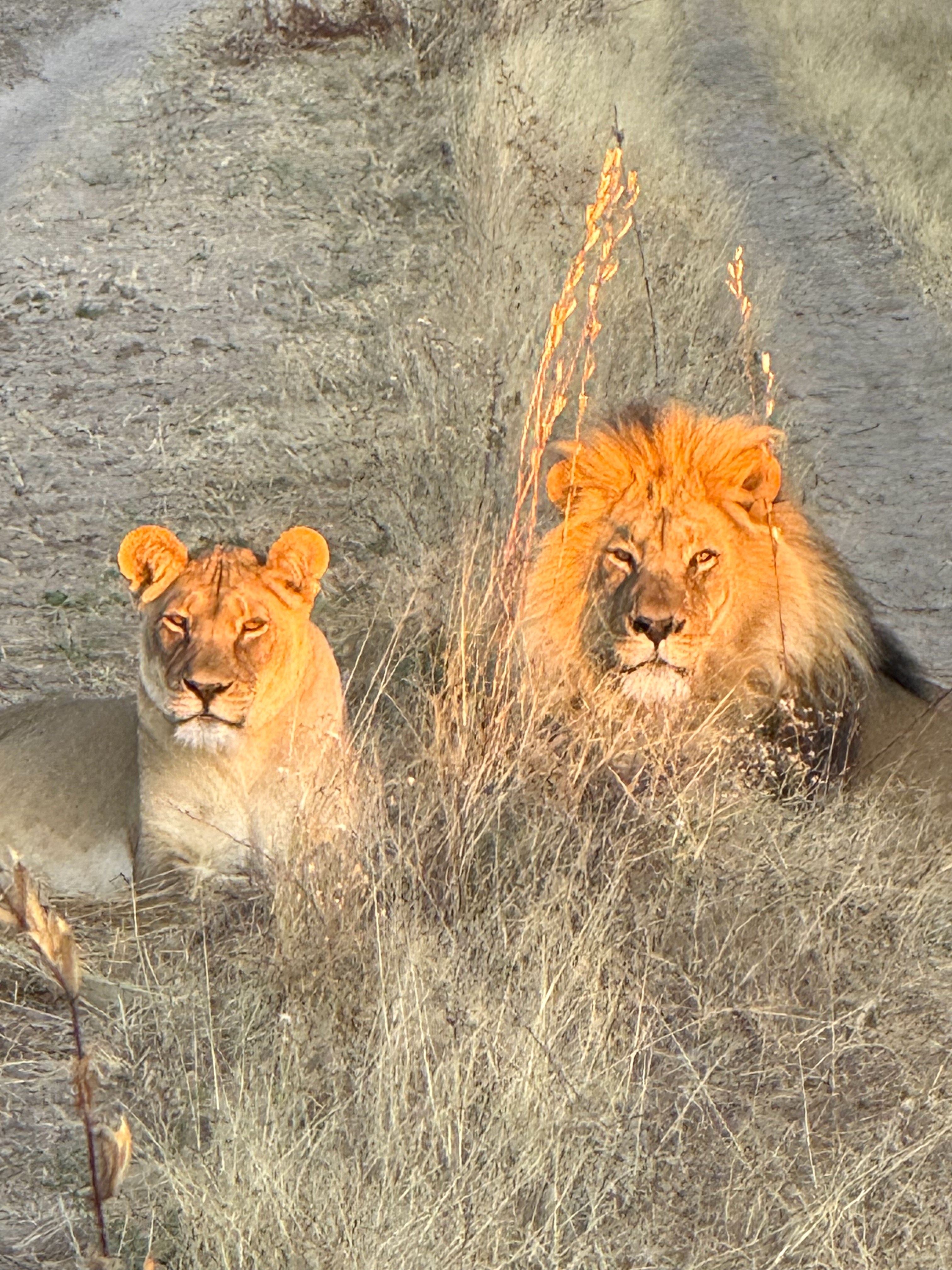
The Importance Of Safari Tourism…
I wanted to share a story of our recent Safari that focuses on how important tourism is for these countries – and for the animals…because private companies have leased land in order to preserve it for the animals.
The safari camps are called “concessions”, and they license massive tracts of land from the government. All of the private camps have anti-poaching teams to keep the animals safe, and the camps not only employ lots of local people, but they have programs designed to help local villages with education, modernization and protecting local culture as well.
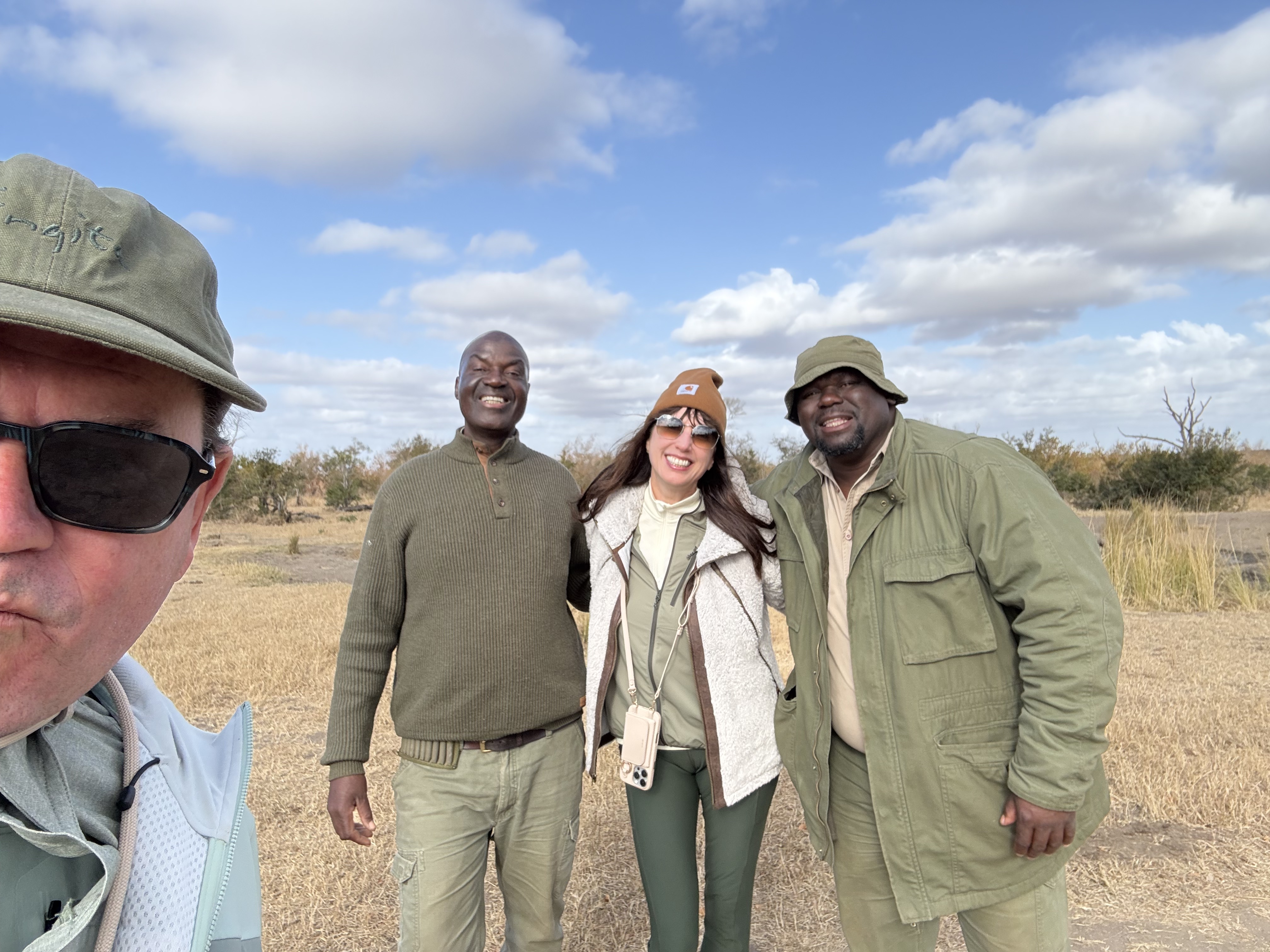
Meet George and Louis. They were our guide and tracking team at Singita Boulders, located at Sabi Sand in South Africa.
Both grew up in local villages: their ancestors lives off the land. Now, they make a good living by offering their tracking expertise and animal knowledge to visitors. The money they make goes back into their communities in positive ways.
As one report noted:
“Safari is so crucial to rural Africa because of a lack of other reliable jobs. The land is generally not fertile enough to turn a profit on agriculture, and the developing nature of many of Africa’s economies means that rural areas often get left behind when countries consider how to grow and expand.”
Botswana’s Endless Animal Kingdom…
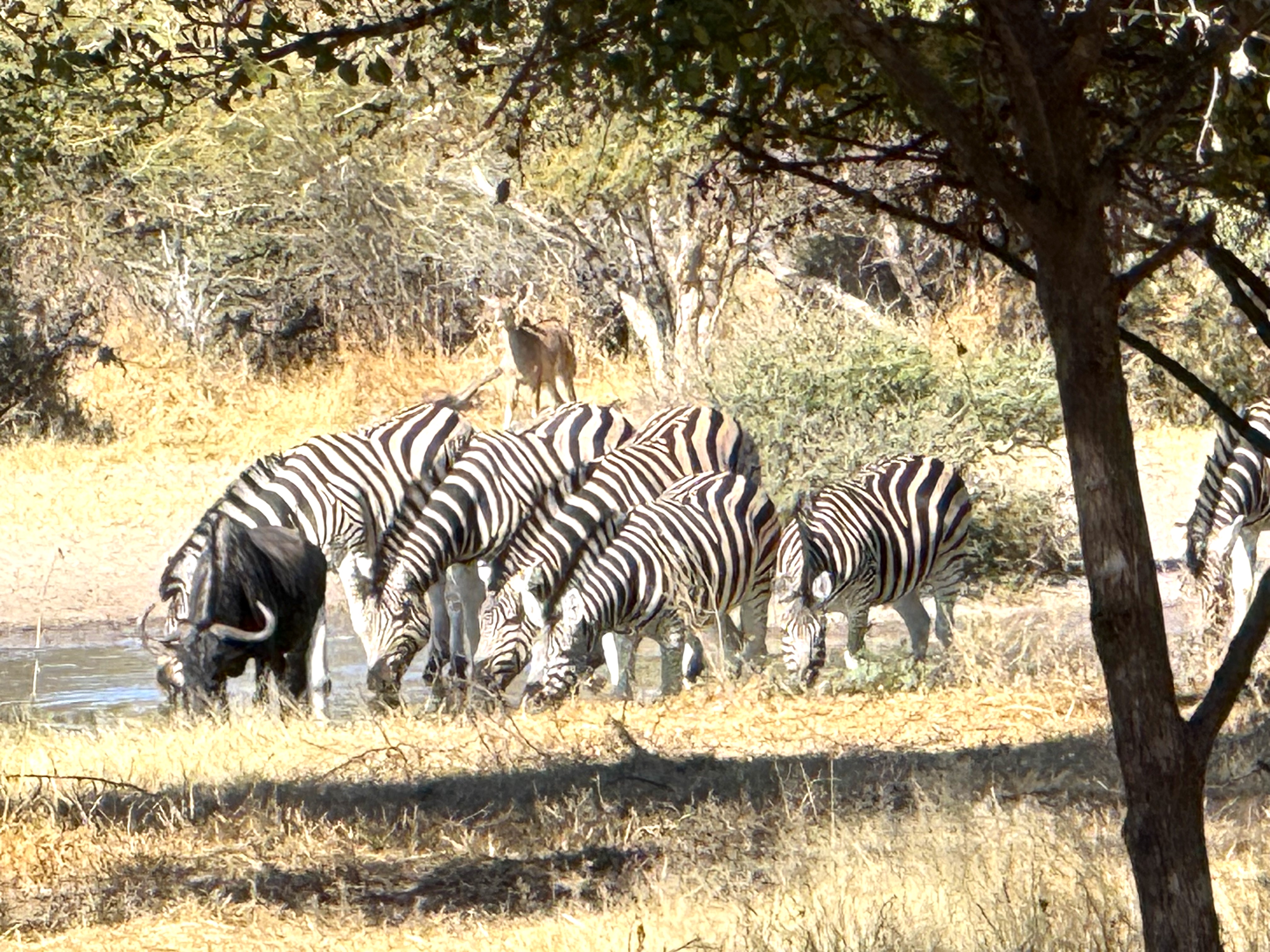
At our first cam at Dinaka, we watched dozens of Zebra sharing the watering hole with a Wildebeest.
Botswana is known for the freedom animals have to roam. Many have their own territories they stay in, but that is the animal’s choice…there are no fences to keep them constrained at all…which is why we were told to be vigilant and NOT to leave our rooms after dark.

This White Rhino is making a big comeback in the area, thanks to anti-poaching efforts like trimming the horn to make the animal less valuable to the poacher. It will grow back so there is no harm to the animal at all.
Botswana has a strong commitment to wildlife conservation, with over 40% of its land dedicated to national parks and game reserves. The country’s low-volume, high-value tourism model helps minimize environmental impact and fund conservation efforts. Anti-poaching initiatives and collaborations with neighboring countries further support the protection of free-ranging animals and their migration routes.
Here’s another Lion encounter we had, again forcing us off the road!
Botswana boasts the world’s largest elephant population, estimated at up to 130,000 animals…we saw that up close when we happened upon an elephant “superhighway”:
You see, the animals have the right of way, and they like wandering along the sandy roads of the Kalahari desert as they feed on the bushes and trees…and boy do they love to eat! So do these guys:
We love Giraffes!
Other commonly sighted animals include hippos, wildebeest, warthogs and various antelope species like Springbok and Kudu as well…
Revenue generated from safari tourism is channeled into community development projects like healthcare, education, and social welfare programs, improving the quality of life for residents.
There is job creation, help for the local communities and conservation efforts as well, supporting anti-poaching patrols, park management, and habitat preservation.
I will be sharing more of our wildlife encounters – with specific stories about Hippos, Elephants, dive-bombing Birds and of course some annoying Baboons!
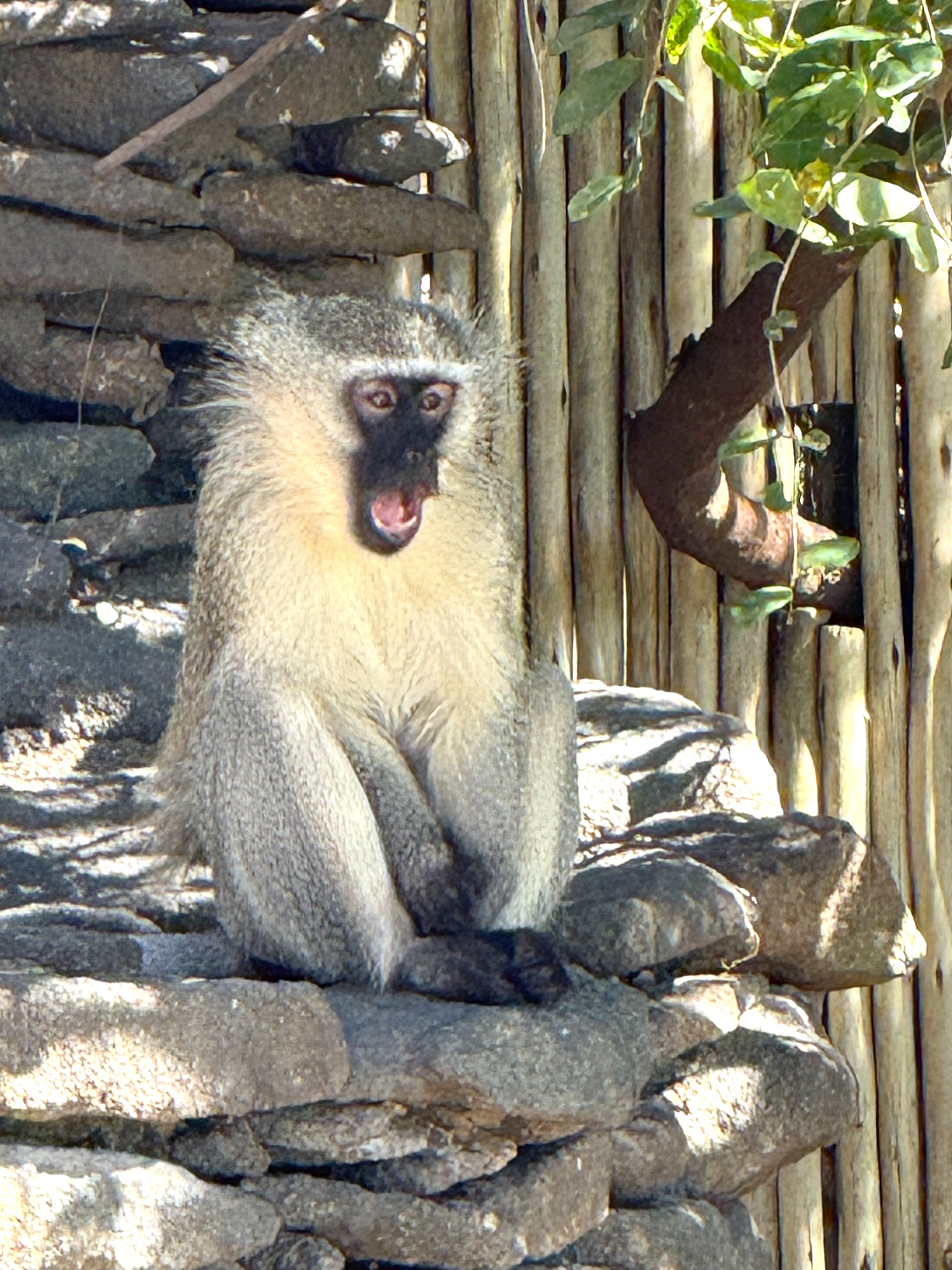
Here’s a more in-depth look at why the term “big 5” is being replaced with a more positive “magnificent 7!”
So you see, the “magnificent seven” is also far too limiting! I will have stories on each of these incredible safari creatures, like I did when I shared our Leopard sighting:
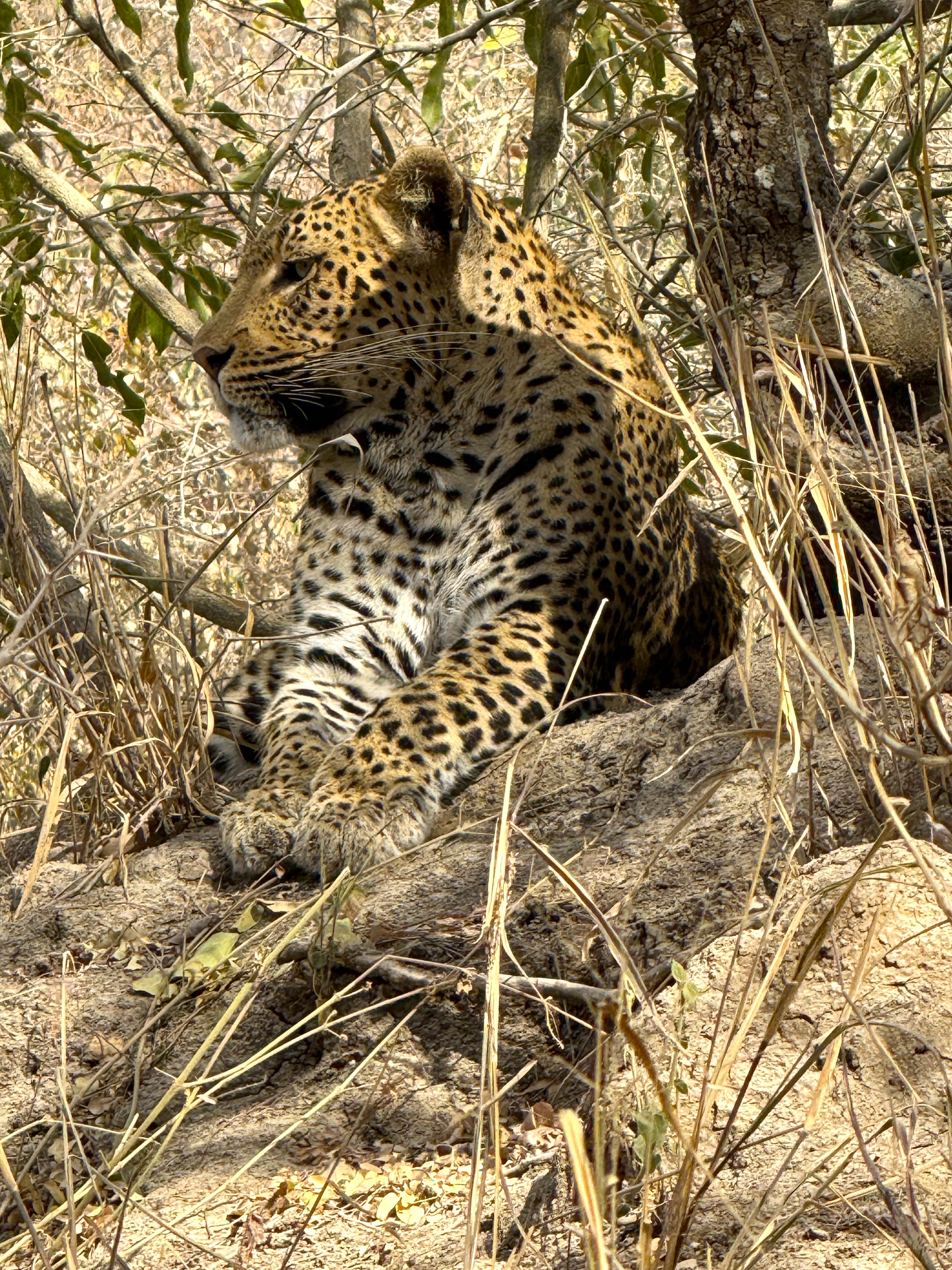
You can see more video and inside info on this amazing cat…see that here:
I already shared a story about how they greeted us at Singita Boulders in South Africa on our first night, plus a look at the festive food welcome we got when we arrived…see it here!
If you enjoy these posts, why not subscribe and never miss out? It’s easy, and there are NO ads of any kind, just stuff I like…click on the main page and “follow” me on the upper right!
If you like the story, please share on social media – thanks!
Categories: Africa, Exotic Travel, Memoirs, nature, Pop Culture, Real Estate, Travel, Travel Adventures, Travel Memoir
 johnrieber
A lovely post, John . I’m so glad you had a great time 💙
LikeLike
Everyone wins – animals, residents, tourists. I never realized how much good safari tourism does. Thanks for a wonderfully eye-opening post, John. It’s not all poaching and starvation. My favorite is how the animals have the right to roam freely.
LikeLike
What an absolutely amazing experience with some incredible photos and videos! It was also really interesting to read about how tourism is quite important to the area. It’s good to learn that the animals are left to roam as they wish too.
LikeLike
Wow, what an experience this must have been. I am glad they take such good care of the animals!
LikeLiked by 1 person
Thank you, it’s a big change from the past when so many were hunted…but it’s an incredible place and there is so much to explore there!
LikeLiked by 1 person
What an amazing experience, John! Thanks for sharing parts of your trip with us. Absolutely loved the footage and photos.
LikeLiked by 1 person
Thank you for reading…more to come including some of the unique food we had there…after all,, it’s a challenge to cook in the Okavango Delta and Kalahari Desert!
LikeLiked by 1 person
good to know the positives behind safaris and that humans are helping not hurting the animals – other than poachers of course
LikeLike
Feels good to be reminded that we’re just visitors in their world. What a trip 👏🏼
LikeLiked by 2 people
Thank you for the comment. I wanted to reinforce the reality that the animals roam free and we get to watch them in their environment. Also, the importance of protecting from from poachers continues and is so important to support. Thanks again for the note!
LikeLike
Absolutely wonderful photos and videos . . . will go back and look at what you have said and talk over the weekend with a hopefully honest Mr Google and learn more . . . thanks!
LikeLiked by 1 person
Love the animal photos….It is great to hear that the animals are being looked after lovingly and that the money is being used in constructive ways….thanx for sharing your adventure. chuq
LikeLike
I’ve always wondered about this John. It’s so good to know that there are protections and that it’s helping the locals, not taking away from them. Your photos, videos and background info really is amazing. Very cool trip.
LikeLike
Botswana is doing it right. It’s so worth saving these gorgeous creatures and their habitat, and eco tourism seems the way to go! Beautiful pictures and videos.
LikeLiked by 1 person
I am so glad you experienced such a positive side of African safari tourism, John. Sadly, there is the ‘dark side’ too; killing for ‘sport’, encouraged by many African countries, and with so many Americans participating in killing everything from Giraffes, to Buffalo, Leopards, and Lions. Even Baboons and smaller animals are killed, in the sick collection of ‘trophies’ by horrible people.
Online source. ‘The countries in southern Africa, especially South Africa, Namibia, and Zimbabwe, are visited by the largest numbers of hunters. Hunting in these countries is accessible and affordable and provides an outstanding experience, especially for the first-timer.’
This makes me so furious, and I am happy that you only took a camera, and very much appreciated what you saw there. I have signed numerous petitions against trophy hunting, and the evil ‘baited hunting’. It is simply income generation for the countries concered, has no conservational merit, and is participated in by sick, entitled, and rich individuals who seem to have a blood lust to satisfy.
Best wishes, Pete.
LikeLiked by 1 person
Pete, I wanted to reinforce that the animals have total freedom to roam and that ego tourism helps protect them…someone made a reference on a previous post worried I was there hunting, which was a horrible thing to suggest.
LikeLiked by 1 person
I would never suggest that you were hunting, you are nothing like that at all. Whoever did that obviously knows nothing about you my friend.
LikeLiked by 1 person
Of course you wouldn’t Pete…but when people drop in or see a headline without reading the story, they can make assumptions…thanks for the note!
LikeLiked by 1 person
Botswana in particular is very aggressive in the anti-poaching front, and I appreciate you sharing this information but I saw ZERO evidence of that in any way. I assume the despicable hunters are secreted in and out of private camps designed to satisfy their bloodlust.
LikeLiked by 1 person